LONGEVITY TESTING

Body Composition - Your Scale is Lying to You
A UCLA study following 3,659 older adults found that relative muscle mass independently predicted survival, while BMI — the number most people fixate on — did not reliably predict mortality at all (Srikanthan & Karlamangla, American Journal of Medicine, 2014).
This is why two 68-year-olds who are both '170 pounds' can have entirely different risk profiles, and why body composition testing matters more the older you get.
How It's Measured
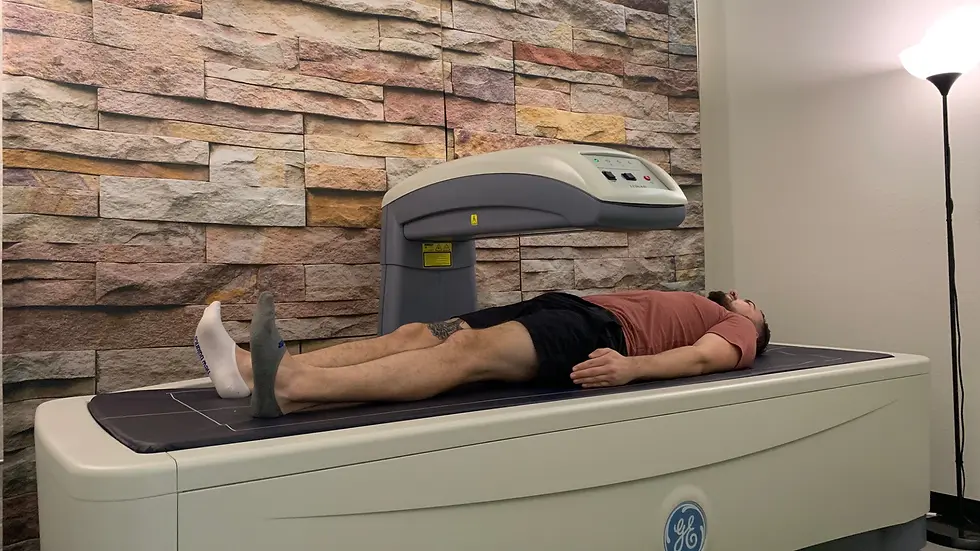
Modern body composition testing uses either bioelectrical impedance or DEXA full-body scans.
Bioelectrical impedance is a quick scan (via a device like InBody) that sends a mild electrical current through the body to distinguish muscle, fat, and water.
DEXA scans are a seven-minute, fully clothed full-body X-ray that gives you precise numbers for how much fat, muscle, and bone mass you have.
